Каталог
Сравнение

Вы здесь

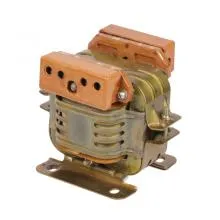
Трансформатор  СТС-7 Т2.
коротко о товаре
  • Марка
    МЭТЗ (Беларусь)
  • Назначение

    Трансформатор силовой - служит для преобразования электрической энергии одного напряжения в энергию другого напряжения. Является основным оборудованием электрических подстанций.

    Трансформатор для прогрева бетона и грунта - предназначен для электропрогрева и других способов электротермообработки смеси и замерзшего грунта с автоматическим регулированием температуры, в условиях строительных площадок. К данным трансформаторам присоединяется нагревательный провод ПНСВ, проложенный внутри бетона, по которому подается электрический ток, преобразующийся в температуру, доходящую до +80 градусов.

    Трансформаторные подстанции - электроустановка, предназначенная для приема, преобразования (повышения или понижения) напряжения в сети переменного тока и распределения электроэнергии. Состоит из силовых трансформаторов, распределительного устройства, устройства автоматического управления и защиты, а также вспомогательных сооружений.

    Трансформаторы тока - предназначен для регулировки тока

    Трансформаторы напряжения - предназначен для регулировки напряжения

    Трансформатор понижающий - многоцелевые трансформаторы небольших габаритов

    Трансформатор разделительный - первичная обмотка отделена от вторичных обмоток при помощи защитного электрического разделения цепей: двойной или усиленной изоляции, или основной изоляции и защитного экрана. Применение такого подключения электроприемника существенно снижает вероятность поражения электрическим током

    Тороидальный трансформатор представляет собой высокоэффективный трансформатор, который легче и меньше, чем альтернативные трансформаторы такой же мощности. Применение тороидальных трансформаторов позволяет уменьшить массу и габариты изделий, повысить КПД, увеличить плотность монтажа

    Назначение
    Трансформатор понижающий многофунциональный
  • СерияСТ, СОБС, СОС, СТС, ОСС
  • Номинальная мощность
    Номинальная мощность трансформатора представляет собой значение полной мощности трансформатора на основном ответвлении, гарантированное заводом-изготовителем в номинальных условиях охлаждающей среды при номинальном напряжении и номинальной частоте.
    Номинальная мощность
    0.0231 кВА
  • все товары МЭТЗ (Беларусь)
цену уточняйте
Как отправить запрос, уточнить цену и получить предложение?
  • 1 Нажмите на кнопку "Отправить запрос"
  • 2 В открывшейся форме укажите контактные данные и отправьте предварительную заявку
  • 3 Поставщик уточнит детали и предоставит предложение на поставку товара
  • 4 Вы можете принять предложение или выбрать другого поставщика
ГК Новые технологии Казань показать телефон
<
>
Безналичный расчет, Банковский перевод подробнее
Транспотрная компания подробнее
Чтобы купить Трансформатор СТС-7 Т2, вам нужно отправить запрос или связаться с поставщиком.
  • Характеристики
  • Поставщики
  • Описание
  • Отзывы (2728)
Характеристики

ВСЕ ХАРАКТЕРИСТИКИ ТОВАРА Трансформатор СТС-7 Т2

Характеристика Значение
Марка
МЭТЗ (Беларусь)
Назначение

Трансформатор силовой - служит для преобразования электрической энергии одного напряжения в энергию другого напряжения. Является основным оборудованием электрических подстанций.

Трансформатор для прогрева бетона и грунта - предназначен для электропрогрева и других способов электротермообработки смеси и замерзшего грунта с автоматическим регулированием температуры, в условиях строительных площадок. К данным трансформаторам присоединяется нагревательный провод ПНСВ, проложенный внутри бетона, по которому подается электрический ток, преобразующийся в температуру, доходящую до +80 градусов.

Трансформаторные подстанции - электроустановка, предназначенная для приема, преобразования (повышения или понижения) напряжения в сети переменного тока и распределения электроэнергии. Состоит из силовых трансформаторов, распределительного устройства, устройства автоматического управления и защиты, а также вспомогательных сооружений.

Трансформаторы тока - предназначен для регулировки тока

Трансформаторы напряжения - предназначен для регулировки напряжения

Трансформатор понижающий - многоцелевые трансформаторы небольших габаритов

Трансформатор разделительный - первичная обмотка отделена от вторичных обмоток при помощи защитного электрического разделения цепей: двойной или усиленной изоляции, или основной изоляции и защитного экрана. Применение такого подключения электроприемника существенно снижает вероятность поражения электрическим током

Тороидальный трансформатор представляет собой высокоэффективный трансформатор, который легче и меньше, чем альтернативные трансформаторы такой же мощности. Применение тороидальных трансформаторов позволяет уменьшить массу и габариты изделий, повысить КПД, увеличить плотность монтажа

Назначение
Трансформатор понижающий многофунциональный
Серия СТ, СОБС, СОС, СТС, ОСС
Номинальная мощность
Номинальная мощность трансформатора представляет собой значение полной мощности трансформатора на основном ответвлении, гарантированное заводом-изготовителем в номинальных условиях охлаждающей среды при номинальном напряжении и номинальной частоте.
Номинальная мощность
0.0231 кВА
Номинальное высшее напряжение

Номинальное напряжение первичной обмотки при холостом ходе трансформатора

Номинальное высшее напряжение
200 В
Номинальное низшее напряжение

Номинальное напряжение вторичной обмотки при холостом ходе трансформатора

Номинальное низшее напряжение
24 В
Количество фаз
В обычных сетях применяются однофазные трансформаторы, в сетях на три провода (фаза, ноль, заземление) нужен трехфазный трансформатор.
Количество фаз
Однофазный
Тип диэлектрика трансформатора
По типу охлаждения устройства делятся на две категории – силовые сухие трансформаторы (с воздушным охлаждением) и силовые масляные трансформаторы
Тип диэлектрика трансформатора
Сухой
Характеристика Значение
Частота 50 Гц
Степень защиты
Маркировка степени защиты оболочки электрооборудования осуществляется при помощи международного знака защиты (IP) и двух цифр, первая из которых означает защиту от попадания твёрдых предметов, вторая — от проникновения воды. IP00 - защита отсутствует. IP65 - пыленепроницаемое, с защитой от водяных струй с любого направления
Степень защиты
IP20
Масса полная
Для трансформатора - полная масса трансформатора, с учетом массы масла. Для КТП - полная масса КТП, без учета массы трансформаторов
Масса полная
0.95 кг
Климатическое исполнение и категория размещения
Климатическое исполнение — как правило, указывается в последней группе знаков обозначений технических устройств. Буквенная часть обозначает климатическую зону. Следующая за буквенной цифровая часть означает категорию размещения.
Климатическое исполнение и категория размещения
Т2
Габариты, длина 91 мм
Габариты, ширина 76 мм
Габариты, высота 92 мм
Гарантия 36 мес.
Поставщики
МЭТЗ показать телефон Россия цену уточняйте
Как отправить запрос, уточнить цену и получить предложение?
  • 1 Нажмите на кнопку "Отправить запрос"
  • 2 В открывшейся форме укажите контактные данные и отправьте предварительную заявку
  • 3 Поставщик уточнит детали и предоставит предложение на поставку товара
  • 4 Вы можете принять предложение или выбрать другого поставщика
Описание
описание

Трансформаторы СТС (сигнальные трансформаторы светодиодных светофоров) предназначены для электропитания светодиодных светофоров микропроцессорных систем железнодорожной автоматики.

Трансформаторы соответствует требованиям СТБ МЭК 61558-2-6 ГОСТ 15963-79.

Вид климатического исполнения – Т2 по ГОСТ 15150-69.

Температура окружающего воздуха от минус 40 С до плюс 70 С.

Номинальные рабочие значения механических внешних воздействующих факторов – ГОСТ 30631-99 для групп механического исполнения М6 при установке в любом рабочем положении.

Трансформаторы предназначены для работы в продолжительном режиме.

Исполнение трансформаторов по условиям установки на месте работы – встраиваемые, стационарные.

В соответствии с требованиями электромагнитной совместимости
трансформаторы могут применяться в окружающей обстановке 1 – среде, характерной для оборудования, устанавливаемого в жилых, коммерческих зданиях или зданиях лёгкой промышленности, предназначенного для непосредственного подключения к низковольтным электрическим сетям общего пользования.

Класс нагревостойкости изоляции – В по ГОСТ 8865-83.

По способу защиты от поражения электрическим током трансформаторы относятся к классу II по ГОСТ 12.2.007.0-75 и имеют степень защиты IP20 по ГОСТ 14254-96.
Корректированный уровень звуковой мощности трансформаторов не должен превышать 20 дБА как при холостом ходе, так и при номинальной нагрузке.

Отзывы (2728)
Трансформатор СТС-7 Т2

Arrowheads reveal the presence of a mysterious army in Europe’s oldest battle жесткое русское порно Today, the lush, green valley surrounding the Tollense River in northeast Germany appears to be a serene place to appreciate nature. But to archaeologists, the Tollense Valley is considered Europe’s oldest battlefield. An amateur archaeologist first spotted a bone sticking out of the riverbank in 1996. A series of ongoing site excavations since 2008 has shown that the thousands of bones and hundreds of weapons preserved by the valley’s undisturbed environment were part of a large-scale battle 3,250 years ago. The biggest mysteries that researchers aim to uncover are why the battle occurred and who fought in it. These are questions that they are now one step closer to answering. ozens of bronze and flint arrowheads recovered from the Tollense Valley are revealing details about the able-bodied warriors who fought in the Bronze Age battle. The research team analyzed and compared the arrowheads, some of which were still embedded in the remains of the fallen. While many of these weapons were locally produced, some bearing different shapes came from a region that now includes modern Bavaria and Moravia. The outliers’ presence suggests that a southern army clashed with local tribes in the valley, and researchers suspect the conflict began at a key landmark along the river. Back to the future Scientists are harnessing the power of artificial intelligence to detect hidden archaeological sites buried below the sand of the sprawling Rub‘ al-Khali desert. The desert spans 250,000 square miles (650,000 square kilometers) on the Arabian Peninsula, and its name translates to “the Empty Quarter” in English. To unravel the secrets of the desolate terrain, researchers are combining machine learning with a satellite imagery technique that uses radio waves to spot objects that may be concealed beneath surfaces. The technology will be tested in October when excavations assess whether predicted structures are present at the Saruq Al Hadid complex in Dubai, United Arab Emirates. Separately, an AI-assisted analysis uncovered a trove of ancient symbols in Peru’s Nazca Desert, nearly doubling the number of known geoglyphs, or stone and gravel arranged into giant shapes that depict animals, humans and geometric designs.

Arrowheads reveal the presence of a mysterious army in Europe’s oldest battle жесткое русское порно Today, the lush, green valley surrounding the Tollense River in northeast Germany appears to be a serene place to appreciate nature. But to archaeologists, the Tollense Valley is considered Europe’s oldest battlefield. An amateur archaeologist first spotted a bone sticking out of the riverbank in 1996. A series of ongoing site excavations since 2008 has shown that the thousands of bones and hundreds of weapons preserved by the valley’s undisturbed environment were part of a large-scale battle 3,250 years ago. The biggest mysteries that researchers aim to uncover are why the battle occurred and who fought in it. These are questions that they are now one step closer to answering. ozens of bronze and flint arrowheads recovered from the Tollense Valley are revealing details about the able-bodied warriors who fought in the Bronze Age battle. The research team analyzed and compared the arrowheads, some of which were still embedded in the remains of the fallen. While many of these weapons were locally produced, some bearing different shapes came from a region that now includes modern Bavaria and Moravia. The outliers’ presence suggests that a southern army clashed with local tribes in the valley, and researchers suspect the conflict began at a key landmark along the river. Back to the future Scientists are harnessing the power of artificial intelligence to detect hidden archaeological sites buried below the sand of the sprawling Rub‘ al-Khali desert. The desert spans 250,000 square miles (650,000 square kilometers) on the Arabian Peninsula, and its name translates to “the Empty Quarter” in English. To unravel the secrets of the desolate terrain, researchers are combining machine learning with a satellite imagery technique that uses radio waves to spot objects that may be concealed beneath surfaces. The technology will be tested in October when excavations assess whether predicted structures are present at the Saruq Al Hadid complex in Dubai, United Arab Emirates. Separately, an AI-assisted analysis uncovered a trove of ancient symbols in Peru’s Nazca Desert, nearly doubling the number of known geoglyphs, or stone and gravel arranged into giant shapes that depict animals, humans and geometric designs.

Arrowheads reveal the presence of a mysterious army in Europe’s oldest battle жесткое русское порно Today, the lush, green valley surrounding the Tollense River in northeast Germany appears to be a serene place to appreciate nature. But to archaeologists, the Tollense Valley is considered Europe’s oldest battlefield. An amateur archaeologist first spotted a bone sticking out of the riverbank in 1996. A series of ongoing site excavations since 2008 has shown that the thousands of bones and hundreds of weapons preserved by the valley’s undisturbed environment were part of a large-scale battle 3,250 years ago. The biggest mysteries that researchers aim to uncover are why the battle occurred and who fought in it. These are questions that they are now one step closer to answering. ozens of bronze and flint arrowheads recovered from the Tollense Valley are revealing details about the able-bodied warriors who fought in the Bronze Age battle. The research team analyzed and compared the arrowheads, some of which were still embedded in the remains of the fallen. While many of these weapons were locally produced, some bearing different shapes came from a region that now includes modern Bavaria and Moravia. The outliers’ presence suggests that a southern army clashed with local tribes in the valley, and researchers suspect the conflict began at a key landmark along the river. Back to the future Scientists are harnessing the power of artificial intelligence to detect hidden archaeological sites buried below the sand of the sprawling Rub‘ al-Khali desert. The desert spans 250,000 square miles (650,000 square kilometers) on the Arabian Peninsula, and its name translates to “the Empty Quarter” in English. To unravel the secrets of the desolate terrain, researchers are combining machine learning with a satellite imagery technique that uses radio waves to spot objects that may be concealed beneath surfaces. The technology will be tested in October when excavations assess whether predicted structures are present at the Saruq Al Hadid complex in Dubai, United Arab Emirates. Separately, an AI-assisted analysis uncovered a trove of ancient symbols in Peru’s Nazca Desert, nearly doubling the number of known geoglyphs, or stone and gravel arranged into giant shapes that depict animals, humans and geometric designs.

Трансформатор СТС-7 Т2

Arrowheads reveal the presence of a mysterious army in Europe’s oldest battle гей порно член Today, the lush, green valley surrounding the Tollense River in northeast Germany appears to be a serene place to appreciate nature. But to archaeologists, the Tollense Valley is considered Europe’s oldest battlefield. An amateur archaeologist first spotted a bone sticking out of the riverbank in 1996. A series of ongoing site excavations since 2008 has shown that the thousands of bones and hundreds of weapons preserved by the valley’s undisturbed environment were part of a large-scale battle 3,250 years ago. The biggest mysteries that researchers aim to uncover are why the battle occurred and who fought in it. These are questions that they are now one step closer to answering. ozens of bronze and flint arrowheads recovered from the Tollense Valley are revealing details about the able-bodied warriors who fought in the Bronze Age battle. The research team analyzed and compared the arrowheads, some of which were still embedded in the remains of the fallen. While many of these weapons were locally produced, some bearing different shapes came from a region that now includes modern Bavaria and Moravia. The outliers’ presence suggests that a southern army clashed with local tribes in the valley, and researchers suspect the conflict began at a key landmark along the river. Back to the future Scientists are harnessing the power of artificial intelligence to detect hidden archaeological sites buried below the sand of the sprawling Rub‘ al-Khali desert. The desert spans 250,000 square miles (650,000 square kilometers) on the Arabian Peninsula, and its name translates to “the Empty Quarter” in English. To unravel the secrets of the desolate terrain, researchers are combining machine learning with a satellite imagery technique that uses radio waves to spot objects that may be concealed beneath surfaces. The technology will be tested in October when excavations assess whether predicted structures are present at the Saruq Al Hadid complex in Dubai, United Arab Emirates. Separately, an AI-assisted analysis uncovered a trove of ancient symbols in Peru’s Nazca Desert, nearly doubling the number of known geoglyphs, or stone and gravel arranged into giant shapes that depict animals, humans and geometric designs.

Arrowheads reveal the presence of a mysterious army in Europe’s oldest battle гей порно член Today, the lush, green valley surrounding the Tollense River in northeast Germany appears to be a serene place to appreciate nature. But to archaeologists, the Tollense Valley is considered Europe’s oldest battlefield. An amateur archaeologist first spotted a bone sticking out of the riverbank in 1996. A series of ongoing site excavations since 2008 has shown that the thousands of bones and hundreds of weapons preserved by the valley’s undisturbed environment were part of a large-scale battle 3,250 years ago. The biggest mysteries that researchers aim to uncover are why the battle occurred and who fought in it. These are questions that they are now one step closer to answering. ozens of bronze and flint arrowheads recovered from the Tollense Valley are revealing details about the able-bodied warriors who fought in the Bronze Age battle. The research team analyzed and compared the arrowheads, some of which were still embedded in the remains of the fallen. While many of these weapons were locally produced, some bearing different shapes came from a region that now includes modern Bavaria and Moravia. The outliers’ presence suggests that a southern army clashed with local tribes in the valley, and researchers suspect the conflict began at a key landmark along the river. Back to the future Scientists are harnessing the power of artificial intelligence to detect hidden archaeological sites buried below the sand of the sprawling Rub‘ al-Khali desert. The desert spans 250,000 square miles (650,000 square kilometers) on the Arabian Peninsula, and its name translates to “the Empty Quarter” in English. To unravel the secrets of the desolate terrain, researchers are combining machine learning with a satellite imagery technique that uses radio waves to spot objects that may be concealed beneath surfaces. The technology will be tested in October when excavations assess whether predicted structures are present at the Saruq Al Hadid complex in Dubai, United Arab Emirates. Separately, an AI-assisted analysis uncovered a trove of ancient symbols in Peru’s Nazca Desert, nearly doubling the number of known geoglyphs, or stone and gravel arranged into giant shapes that depict animals, humans and geometric designs.

Arrowheads reveal the presence of a mysterious army in Europe’s oldest battle гей порно член Today, the lush, green valley surrounding the Tollense River in northeast Germany appears to be a serene place to appreciate nature. But to archaeologists, the Tollense Valley is considered Europe’s oldest battlefield. An amateur archaeologist first spotted a bone sticking out of the riverbank in 1996. A series of ongoing site excavations since 2008 has shown that the thousands of bones and hundreds of weapons preserved by the valley’s undisturbed environment were part of a large-scale battle 3,250 years ago. The biggest mysteries that researchers aim to uncover are why the battle occurred and who fought in it. These are questions that they are now one step closer to answering. ozens of bronze and flint arrowheads recovered from the Tollense Valley are revealing details about the able-bodied warriors who fought in the Bronze Age battle. The research team analyzed and compared the arrowheads, some of which were still embedded in the remains of the fallen. While many of these weapons were locally produced, some bearing different shapes came from a region that now includes modern Bavaria and Moravia. The outliers’ presence suggests that a southern army clashed with local tribes in the valley, and researchers suspect the conflict began at a key landmark along the river. Back to the future Scientists are harnessing the power of artificial intelligence to detect hidden archaeological sites buried below the sand of the sprawling Rub‘ al-Khali desert. The desert spans 250,000 square miles (650,000 square kilometers) on the Arabian Peninsula, and its name translates to “the Empty Quarter” in English. To unravel the secrets of the desolate terrain, researchers are combining machine learning with a satellite imagery technique that uses radio waves to spot objects that may be concealed beneath surfaces. The technology will be tested in October when excavations assess whether predicted structures are present at the Saruq Al Hadid complex in Dubai, United Arab Emirates. Separately, an AI-assisted analysis uncovered a trove of ancient symbols in Peru’s Nazca Desert, nearly doubling the number of known geoglyphs, or stone and gravel arranged into giant shapes that depict animals, humans and geometric designs.

Трансформатор СТС-7 Т2

Arrowheads reveal the presence of a mysterious army in Europe’s oldest battle гей онлайн Today, the lush, green valley surrounding the Tollense River in northeast Germany appears to be a serene place to appreciate nature. But to archaeologists, the Tollense Valley is considered Europe’s oldest battlefield. An amateur archaeologist first spotted a bone sticking out of the riverbank in 1996. A series of ongoing site excavations since 2008 has shown that the thousands of bones and hundreds of weapons preserved by the valley’s undisturbed environment were part of a large-scale battle 3,250 years ago. The biggest mysteries that researchers aim to uncover are why the battle occurred and who fought in it. These are questions that they are now one step closer to answering. ozens of bronze and flint arrowheads recovered from the Tollense Valley are revealing details about the able-bodied warriors who fought in the Bronze Age battle. The research team analyzed and compared the arrowheads, some of which were still embedded in the remains of the fallen. While many of these weapons were locally produced, some bearing different shapes came from a region that now includes modern Bavaria and Moravia. The outliers’ presence suggests that a southern army clashed with local tribes in the valley, and researchers suspect the conflict began at a key landmark along the river. Back to the future Scientists are harnessing the power of artificial intelligence to detect hidden archaeological sites buried below the sand of the sprawling Rub‘ al-Khali desert. The desert spans 250,000 square miles (650,000 square kilometers) on the Arabian Peninsula, and its name translates to “the Empty Quarter” in English. To unravel the secrets of the desolate terrain, researchers are combining machine learning with a satellite imagery technique that uses radio waves to spot objects that may be concealed beneath surfaces. The technology will be tested in October when excavations assess whether predicted structures are present at the Saruq Al Hadid complex in Dubai, United Arab Emirates. Separately, an AI-assisted analysis uncovered a trove of ancient symbols in Peru’s Nazca Desert, nearly doubling the number of known geoglyphs, or stone and gravel arranged into giant shapes that depict animals, humans and geometric designs.

Arrowheads reveal the presence of a mysterious army in Europe’s oldest battle гей онлайн Today, the lush, green valley surrounding the Tollense River in northeast Germany appears to be a serene place to appreciate nature. But to archaeologists, the Tollense Valley is considered Europe’s oldest battlefield. An amateur archaeologist first spotted a bone sticking out of the riverbank in 1996. A series of ongoing site excavations since 2008 has shown that the thousands of bones and hundreds of weapons preserved by the valley’s undisturbed environment were part of a large-scale battle 3,250 years ago. The biggest mysteries that researchers aim to uncover are why the battle occurred and who fought in it. These are questions that they are now one step closer to answering. ozens of bronze and flint arrowheads recovered from the Tollense Valley are revealing details about the able-bodied warriors who fought in the Bronze Age battle. The research team analyzed and compared the arrowheads, some of which were still embedded in the remains of the fallen. While many of these weapons were locally produced, some bearing different shapes came from a region that now includes modern Bavaria and Moravia. The outliers’ presence suggests that a southern army clashed with local tribes in the valley, and researchers suspect the conflict began at a key landmark along the river. Back to the future Scientists are harnessing the power of artificial intelligence to detect hidden archaeological sites buried below the sand of the sprawling Rub‘ al-Khali desert. The desert spans 250,000 square miles (650,000 square kilometers) on the Arabian Peninsula, and its name translates to “the Empty Quarter” in English. To unravel the secrets of the desolate terrain, researchers are combining machine learning with a satellite imagery technique that uses radio waves to spot objects that may be concealed beneath surfaces. The technology will be tested in October when excavations assess whether predicted structures are present at the Saruq Al Hadid complex in Dubai, United Arab Emirates. Separately, an AI-assisted analysis uncovered a trove of ancient symbols in Peru’s Nazca Desert, nearly doubling the number of known geoglyphs, or stone and gravel arranged into giant shapes that depict animals, humans and geometric designs.

Arrowheads reveal the presence of a mysterious army in Europe’s oldest battle гей онлайн Today, the lush, green valley surrounding the Tollense River in northeast Germany appears to be a serene place to appreciate nature. But to archaeologists, the Tollense Valley is considered Europe’s oldest battlefield. An amateur archaeologist first spotted a bone sticking out of the riverbank in 1996. A series of ongoing site excavations since 2008 has shown that the thousands of bones and hundreds of weapons preserved by the valley’s undisturbed environment were part of a large-scale battle 3,250 years ago. The biggest mysteries that researchers aim to uncover are why the battle occurred and who fought in it. These are questions that they are now one step closer to answering. ozens of bronze and flint arrowheads recovered from the Tollense Valley are revealing details about the able-bodied warriors who fought in the Bronze Age battle. The research team analyzed and compared the arrowheads, some of which were still embedded in the remains of the fallen. While many of these weapons were locally produced, some bearing different shapes came from a region that now includes modern Bavaria and Moravia. The outliers’ presence suggests that a southern army clashed with local tribes in the valley, and researchers suspect the conflict began at a key landmark along the river. Back to the future Scientists are harnessing the power of artificial intelligence to detect hidden archaeological sites buried below the sand of the sprawling Rub‘ al-Khali desert. The desert spans 250,000 square miles (650,000 square kilometers) on the Arabian Peninsula, and its name translates to “the Empty Quarter” in English. To unravel the secrets of the desolate terrain, researchers are combining machine learning with a satellite imagery technique that uses radio waves to spot objects that may be concealed beneath surfaces. The technology will be tested in October when excavations assess whether predicted structures are present at the Saruq Al Hadid complex in Dubai, United Arab Emirates. Separately, an AI-assisted analysis uncovered a trove of ancient symbols in Peru’s Nazca Desert, nearly doubling the number of known geoglyphs, or stone and gravel arranged into giant shapes that depict animals, humans and geometric designs.

Трансформатор СТС-7 Т2

Scientists have solved the mystery of a 650-foot mega-tsunami that made the Earth vibrate for 9 days kraken3yvbvzmhytnrnuhsy772i6dfobofu652e27f5hx6y5cpj7rgyd onion It started with a melting glacier that set off a huge landslide, which triggered a 650-foot high mega-tsunami in Greenland last September. Then came something inexplicable: a mysterious vibration that shook the planet for nine days. Over the past year, dozens of scientists across the world have been trying to figure out what this signal was. Now they have an answer, according to a new study in the journal Science, and it provides yet another warning that the Arctic is entering “uncharted waters” as humans push global temperatures ever upwards. https://kraken2trfqodidvlh4aa337cpzfrhdlfldhve5nf7njhumwr7insta.cc kraken3yvbvzmhytnrnuhsy772i6dfobofu652e27f5hx6y5cpj7rgyd onion Some seismologists thought their instruments were broken when they started picking up vibrations through the ground back in September, said Stephen Hicks, a study co-author and a seismologist at University College London. It wasn’t the rich orchestra of high pitches and rumbles you might expect with an earthquake, but more of a monotonous hum, he told CNN. Earthquake signals tend to last for minutes; this one lasted for nine days. He was baffled, it was “completely unprecedented,” he said. Seismologists traced the signal to eastern Greenland, but couldn’t pin down a specific location. So they contacted colleagues in Denmark, who had received reports of a landslide-triggered tsunami in a remote part of the region called Dickson Fjord. The result was a nearly year-long collaboration between 68 scientists across 15 countries, who combed through seismic, satellite and on-the-ground data, as well as simulations of tsunami waves to solve the puzzle.

Scientists have solved the mystery of a 650-foot mega-tsunami that made the Earth vibrate for 9 days kraken3yvbvzmhytnrnuhsy772i6dfobofu652e27f5hx6y5cpj7rgyd onion It started with a melting glacier that set off a huge landslide, which triggered a 650-foot high mega-tsunami in Greenland last September. Then came something inexplicable: a mysterious vibration that shook the planet for nine days. Over the past year, dozens of scientists across the world have been trying to figure out what this signal was. Now they have an answer, according to a new study in the journal Science, and it provides yet another warning that the Arctic is entering “uncharted waters” as humans push global temperatures ever upwards. https://kraken2trfqodidvlh4aa337cpzfrhdlfldhve5nf7njhumwr7insta.cc kraken3yvbvzmhytnrnuhsy772i6dfobofu652e27f5hx6y5cpj7rgyd onion Some seismologists thought their instruments were broken when they started picking up vibrations through the ground back in September, said Stephen Hicks, a study co-author and a seismologist at University College London. It wasn’t the rich orchestra of high pitches and rumbles you might expect with an earthquake, but more of a monotonous hum, he told CNN. Earthquake signals tend to last for minutes; this one lasted for nine days. He was baffled, it was “completely unprecedented,” he said. Seismologists traced the signal to eastern Greenland, but couldn’t pin down a specific location. So they contacted colleagues in Denmark, who had received reports of a landslide-triggered tsunami in a remote part of the region called Dickson Fjord. The result was a nearly year-long collaboration between 68 scientists across 15 countries, who combed through seismic, satellite and on-the-ground data, as well as simulations of tsunami waves to solve the puzzle.

Scientists have solved the mystery of a 650-foot mega-tsunami that made the Earth vibrate for 9 days kraken3yvbvzmhytnrnuhsy772i6dfobofu652e27f5hx6y5cpj7rgyd onion It started with a melting glacier that set off a huge landslide, which triggered a 650-foot high mega-tsunami in Greenland last September. Then came something inexplicable: a mysterious vibration that shook the planet for nine days. Over the past year, dozens of scientists across the world have been trying to figure out what this signal was. Now they have an answer, according to a new study in the journal Science, and it provides yet another warning that the Arctic is entering “uncharted waters” as humans push global temperatures ever upwards. https://kraken2trfqodidvlh4aa337cpzfrhdlfldhve5nf7njhumwr7insta.cc kraken3yvbvzmhytnrnuhsy772i6dfobofu652e27f5hx6y5cpj7rgyd onion Some seismologists thought their instruments were broken when they started picking up vibrations through the ground back in September, said Stephen Hicks, a study co-author and a seismologist at University College London. It wasn’t the rich orchestra of high pitches and rumbles you might expect with an earthquake, but more of a monotonous hum, he told CNN. Earthquake signals tend to last for minutes; this one lasted for nine days. He was baffled, it was “completely unprecedented,” he said. Seismologists traced the signal to eastern Greenland, but couldn’t pin down a specific location. So they contacted colleagues in Denmark, who had received reports of a landslide-triggered tsunami in a remote part of the region called Dickson Fjord. The result was a nearly year-long collaboration between 68 scientists across 15 countries, who combed through seismic, satellite and on-the-ground data, as well as simulations of tsunami waves to solve the puzzle.

Трансформатор СТС-7 Т2

Scientists have solved the mystery of a 650-foot mega-tsunami that made the Earth vibrate for 9 days kraken4qzqnoi7ogpzpzwrxk7mw53n5i56loydwiyonu4owxsh4g67yd It started with a melting glacier that set off a huge landslide, which triggered a 650-foot high mega-tsunami in Greenland last September. Then came something inexplicable: a mysterious vibration that shook the planet for nine days. Over the past year, dozens of scientists across the world have been trying to figure out what this signal was. Now they have an answer, according to a new study in the journal Science, and it provides yet another warning that the Arctic is entering “uncharted waters” as humans push global temperatures ever upwards. https://kraken2trfqodidvlh4aa337cpzfrhdlfldhve5nf7njhumwr7insta.cc kraken3yvbvzmhytnrnuhsy772i6dfobofu652e27f5hx6y5cpj7rgyd Some seismologists thought their instruments were broken when they started picking up vibrations through the ground back in September, said Stephen Hicks, a study co-author and a seismologist at University College London. It wasn’t the rich orchestra of high pitches and rumbles you might expect with an earthquake, but more of a monotonous hum, he told CNN. Earthquake signals tend to last for minutes; this one lasted for nine days. He was baffled, it was “completely unprecedented,” he said. Seismologists traced the signal to eastern Greenland, but couldn’t pin down a specific location. So they contacted colleagues in Denmark, who had received reports of a landslide-triggered tsunami in a remote part of the region called Dickson Fjord. The result was a nearly year-long collaboration between 68 scientists across 15 countries, who combed through seismic, satellite and on-the-ground data, as well as simulations of tsunami waves to solve the puzzle.

Scientists have solved the mystery of a 650-foot mega-tsunami that made the Earth vibrate for 9 days kraken4qzqnoi7ogpzpzwrxk7mw53n5i56loydwiyonu4owxsh4g67yd It started with a melting glacier that set off a huge landslide, which triggered a 650-foot high mega-tsunami in Greenland last September. Then came something inexplicable: a mysterious vibration that shook the planet for nine days. Over the past year, dozens of scientists across the world have been trying to figure out what this signal was. Now they have an answer, according to a new study in the journal Science, and it provides yet another warning that the Arctic is entering “uncharted waters” as humans push global temperatures ever upwards. https://kraken2trfqodidvlh4aa337cpzfrhdlfldhve5nf7njhumwr7insta.cc kraken3yvbvzmhytnrnuhsy772i6dfobofu652e27f5hx6y5cpj7rgyd Some seismologists thought their instruments were broken when they started picking up vibrations through the ground back in September, said Stephen Hicks, a study co-author and a seismologist at University College London. It wasn’t the rich orchestra of high pitches and rumbles you might expect with an earthquake, but more of a monotonous hum, he told CNN. Earthquake signals tend to last for minutes; this one lasted for nine days. He was baffled, it was “completely unprecedented,” he said. Seismologists traced the signal to eastern Greenland, but couldn’t pin down a specific location. So they contacted colleagues in Denmark, who had received reports of a landslide-triggered tsunami in a remote part of the region called Dickson Fjord. The result was a nearly year-long collaboration between 68 scientists across 15 countries, who combed through seismic, satellite and on-the-ground data, as well as simulations of tsunami waves to solve the puzzle.

Scientists have solved the mystery of a 650-foot mega-tsunami that made the Earth vibrate for 9 days kraken4qzqnoi7ogpzpzwrxk7mw53n5i56loydwiyonu4owxsh4g67yd It started with a melting glacier that set off a huge landslide, which triggered a 650-foot high mega-tsunami in Greenland last September. Then came something inexplicable: a mysterious vibration that shook the planet for nine days. Over the past year, dozens of scientists across the world have been trying to figure out what this signal was. Now they have an answer, according to a new study in the journal Science, and it provides yet another warning that the Arctic is entering “uncharted waters” as humans push global temperatures ever upwards. https://kraken2trfqodidvlh4aa337cpzfrhdlfldhve5nf7njhumwr7insta.cc kraken3yvbvzmhytnrnuhsy772i6dfobofu652e27f5hx6y5cpj7rgyd Some seismologists thought their instruments were broken when they started picking up vibrations through the ground back in September, said Stephen Hicks, a study co-author and a seismologist at University College London. It wasn’t the rich orchestra of high pitches and rumbles you might expect with an earthquake, but more of a monotonous hum, he told CNN. Earthquake signals tend to last for minutes; this one lasted for nine days. He was baffled, it was “completely unprecedented,” he said. Seismologists traced the signal to eastern Greenland, but couldn’t pin down a specific location. So they contacted colleagues in Denmark, who had received reports of a landslide-triggered tsunami in a remote part of the region called Dickson Fjord. The result was a nearly year-long collaboration between 68 scientists across 15 countries, who combed through seismic, satellite and on-the-ground data, as well as simulations of tsunami waves to solve the puzzle.

Страницы

Похожие товары:
Трансформатор  СТС-7 Т2
Трансформатор СТС-6 Т2
Трансформатор  СТС-7 Т2
Трансформатор ОСС-0,04
Трансформатор  СТС-7 Т2
Трансформатор ОСС-0,25
Трансформатор  СТС-7 Т2
Трансформатор ОСС-0,16
Трансформатор  СТС-7 Т2
Трансформатор ОСС-0,1
Трансформатор  СТС-7 Т2
Трансформатор ОСС-0,063